
The US announced a 60-day pause on sanctions against Russia and tariffs on other countries, including India, to analyse the global economic impact. This decision, made via an executive order by Trump, has drawn significant criticism from both Republicans and Democrats, who had previously passed the Lindsey O. Graham Sanctioning Russia and Iran Act. US officials stated the waiver allows for assessment of global energy pressures and European allies' refusal to impose secondary sanctions on Russian oil buyers.

An Indian national has been arrested in the US for allegedly falsely claiming American citizenship to vote in the 2024 general election in Minnesota. He faces charges that could lead to a maximum of five years in prison on each count if convicted.

President Donald Trump has announced a promise to issue a USD 5,000 dividend to every adult US citizen if Republicans secure victory in both the House and the Senate in the upcoming midterm elections, citing the nation's economic success under his administration.

Six US Democratic lawmakers, including Pramila Jayapal and Ilhan Omar, have urged US Secretary of State Marco Rubio to address alleged excessive force during student protests in India and concerns over voter purges during his upcoming visit. They also accused Indian diplomatic missions of surveillance of protesters in the US and called for investigations into human rights violations and potential arms sales implications.

The US government has suspended eight major IT firms, including Microsoft, Tata, Infosys, and Wipro, from the Permanent Labour Certification Programme, which allows companies to apply for green cards for foreign workers. This action, announced by Vice President J D Vance, Labour Secretary Keith Sonderling, and Attorney General Todd Blanche, is part of an effort to prevent American workers from being shut out of the job market. The Department of Labour cited abuse of the system, particularly by Microsoft, and also initiated an investigation into the J-1 visa programme used by several universities.

Marco Rubio will visit Mumbai and Jamnagar to discuss energy cooperation as S Jaishankar says India-US trade talks are nearing a landing point, with a few issues unresolved.

The United States has announced new visa restrictions targeting individuals who engage in or facilitate "birth tourism." This move aims to prevent the exploitation of the US immigration system, which allows foreign nationals to travel to the US to give birth, thereby securing US citizenship for their children. The restrictions apply to facilitators, visa "fixers," and medical providers involved in these networks.

The Congress party has questioned the Modi government's decision to defer the Merchant Discount Rate (MDR) on UPI transactions, alleging a potential "U-turn on the U-turn." Congress general secretary Jairam Ramesh highlighted previous denials by the finance minister regarding MDR imposition, only for it to be announced later and now deferred. He expressed concerns about future charges on UPI transactions.

US President Donald Trump has extended the USD 100,000 fee on employers for H-1B foreign workers for another year, citing a significant decrease in registrations from large IT outsourcing firms. This move, aimed at protecting American jobs and ensuring highly-skilled workers, also includes a separate proclamation for enhanced scrutiny of H-1B applications, particularly concerning potential layoffs of US workers.

India has strongly criticised the US decision to suspend the Permanent Labor Certification (PERM) program for eight major IT firms, including Indian giants like TCS and Wipro. New Delhi also condemned US Vice President JD Vance's description of foreign professionals as "indentured servants," calling it "unwarranted and deeply offensive." The move is expected to impact thousands of Indian tech professionals seeking permanent residency in the US and further strains bilateral ties.

US President Donald Trump and First Lady Melania Trump hosted a lavish state dinner for Chinese President Xi Jinping and his wife Peng Liyuan at the White House on September 24, 2026. The guest list featured a who's who of American tech and business leaders, including Jensen Huang, Tim Cook, Sundar Pichai, Elon Musk, Satya Nadella, Sam Altman, Mark Zuckerberg, Jamie Dimon and Jeff Bezos, alongside senior US officials.

A mass shooting and hours-long standoff in Erie, Pennsylvania, left nine people dead, including two children. CBS News, citing local media reports, indicated that law enforcement was dispatched to Perry Street around 5 PM on Friday following witness accounts of an armed man firing shots before entering a residence.

A coalition of 25 Democratic-ruled US states has filed a lawsuit against the Trump administration's decision to impose new tariffs on 60 economies, including India. The states contend that these tariffs, ostensibly aimed at combating forced labour, are illegal taxes that will raise costs for consumers and businesses, and were implemented without proper legal justification.

Prime Minister Narendra Modi and US President Donald Trump held a telephone conversation to review progress in bilateral ties, covering trade, defence, and energy, against the backdrop of heightened trade friction due to the 'Lindsey O. Graham Sanctioning Russia and Iran Act of 2026'.

The Congress party has criticised the government's new 0.4% charge on UPI transactions above Rs 2,000 for merchants, terming it a "Modi tax". Opposition leaders, including Rahul Gandhi and Mallikarjun Kharge, allege that this move will ultimately burden consumers through price hikes and accuse the government of succumbing to American pressure to dilute India's zero-MDR policy. The government states the charge will support banks and fintechs.

Donald Trump announced a landmark agreement with Venezuela, claiming it to be the 'biggest oil deal in world history'. The deal reportedly grants the US majority control over more than 65 billion barrels of Venezuela's proven crude oil reserves, aiming to double American oil reserves and lower domestic gasoline prices.

US Secretary of State Marco Rubio stated he does not believe India and Iran are pursuing a trade deal, despite a recent meeting between their leaders. He acknowledged that many countries engage with the Iranian regime but reiterated President Trump's warning against helping Iran evade sanctions, threatening penalties for nations that do so.

The Congress party has criticised the Modi government over a notification regarding UPI transactions, alleging it paves the way for imposing fees, especially on transactions above Rs 2,000. Rahul Gandhi claimed the government is surrendering to American pressure, while Mallikarjun Kharge highlighted the potential burden on common citizens amidst inflation. The government's notification prohibits charges on UPI transactions up to Rs 2,000 but remains silent on higher amounts, sparking fears of a "Digital Payments Tax."
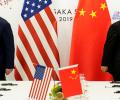
Top US and Chinese officials, including Vice Premier He Lifeng and Treasury Secretary Scott Bessent, held "candid, in-depth and constructive" talks in New York on economic and trade issues, with a specific focus on artificial intelligence. These discussions precede Chinese President Xi Jinping's anticipated visit to Washington and occur amidst new US sanctions targeting countries purchasing Russian oil and gas, and the US unveiling an "AI Force."
Congress leader Rahul Gandhi has accused the Modi government of quietly paving the way for imposing fees on UPI transactions, alleging it's a surrender to American pressure. The government's recent notification exempts charges only up to Rs 2,000, sparking concerns that higher value transactions and eventually all UPI payments could incur fees. Finance Minister Nirmala Sitharaman, however, clarified that Merchant Discount Rate (MDR) applies to merchants, not customers, and supports digital infrastructure.

India, through First Secretary Petal Gahlot, strongly criticised Pakistan at the UN General Assembly, labelling it a "puppet regime" and warning of consequences for its continued support of terrorism. This came after Pakistan Prime Minister Shehbaz Sharif raised the Kashmir issue and credited Donald Trump for intervening in a hypothetical 2025 conflict. India highlighted Pakistan's internal political issues, its history with Osama Bin Laden, and the human rights situation in Pakistan-occupied Kashmir, while also condemning its blasphemy laws and treatment of minorities.

Opposition parties, including Congress, TMC, and RJD, have strongly criticised the government's decision to impose a 0.4% Merchant Discount Rate (MDR) on UPI transactions exceeding Rs 2,000 made to merchants. They allege the move is a result of "American imperialism" and will lead to increased commodity prices, while the government maintains the charge is on merchants and not consumers, with person-to-person transactions remaining free.

The opposition has strongly criticised the government's decision to introduce a 0.4% Merchant Discount Rate (MDR) on UPI transactions above Rs 2,000 for merchants, effective October 15. They allege the move is a result of US pressure and will lead to increased commodity prices, calling it a "betrayal" of the common man. The government, however, clarifies that customers will not be charged, and the MDR applies only to merchants for larger transactions.
The opposition has intensified its criticism of the government's decision to impose a 0.4 per cent Merchant Discount Rate (MDR) on UPI transactions above Rs 2,000, effective October 15. Leaders like Rahul Gandhi and Jairam Ramesh allege the move is a result of US pressure, particularly from American card companies, and demand an immediate rollback, warning of increased costs for consumers.

Iran has conveyed seven conditions to the United States through Qatari mediators for starting negotiations to end the ongoing war, while warning that Tehran is prepared for a "decisive war" if Washington rejects its demands.
The Congress party has accused the Indian government of imposing new charges on UPI transactions due to pressure from the United States, specifically to benefit American card companies. The opposition party demanded the withdrawal of the decision, calling it "anti-national" and alleging it fills the coffers of US firms while burdening Indian citizens. The government, however, clarified that the Merchant Discount Rate (MDR) charges apply only to commercial transactions above Rs 2,000 and are not levied on consumers, a stance supported by the BJP which accused Congress of spreading "fake news".
The Congress party has accused the Modi government of succumbing to US pressure by introducing a 0.4% Merchant Discount Rate (MDR) on UPI transactions over Rs 2,000 for merchants. The party alleges this move aims to benefit US card companies and links it to broader US actions against India, including tariffs and H-1B visa issues. The government, however, clarifies that consumers will not be charged.
The Congress party has strongly criticised the Modi government's decision to introduce a 0.4% Merchant Discount Rate (MDR) on UPI transactions over Rs 2,000, alleging it is a result of US pressure to benefit American card companies. The party also linked this move to broader US actions against India, including tariffs and H-1B visa issues, coining the term "Narendra's Ongoing Trump Appeasement." The government, however, clarified that consumers will not bear the charge, which applies only to merchants.
The Congress party has criticised the government's recent notification regarding UPI transactions, alleging it paves the way for users to be charged fees, particularly for transactions above Rs 2,000. The party claims the government lacks transparency and questions if the move is to benefit American firms. The government, however, states that charges are necessary for the system's sustainability and infrastructure upgrades, with the Finance Minister clarifying that Merchant Discount Rate (MDR) applies to merchants, not customers.

An Indian pilot and several passengers are being hailed as heroes after thwarting a co-pilot's alleged attempt to crash a flydubai flight en route to Tel Aviv. The incident involved a mid-air struggle, a rapid descent, and an emergency landing in Saudi Arabia, with international leaders praising the bravery that saved 174 lives.
Left parties have strongly condemned the government's decision to impose charges on UPI payments exceeding Rs 2,000, with CPI General Secretary D Raja alleging the move was made under "US pressure" to favour foreign payment companies. Both CPI and All India Forward Bloc demand the withdrawal of this "anti-people decision," arguing it burdens consumers and merchants while undermining UPI's role as a public digital infrastructure. They highlight concerns that the charges weaken India's digital sovereignty and serve commercial interests of foreign corporations like Visa and Mastercard.

'If the intention was simply to replicate what's already been done elsewhere, there was no need for a committee at all -- there's already an Act passed there (in Uttarakhand); just copy it, paste it, and you're done. Why waste everyone's time convening a panel for that?'

The Indian government has introduced a 0.4% fee on UPI transactions above Rs 2,000 for merchants, effective October 15, sparking strong opposition from political parties and traders. Despite accusations of foreign influence and demands for a rollback, the finance ministry and top functionaries have stated there will be no reversal, citing the need for a self-sustaining digital payments ecosystem.

The US Department of State has signed a Memorandum of Understanding with the Ultimate Fighting Championship (UFC) to launch a public-private partnership aimed at advancing sports diplomacy worldwide. This initiative will leverage UFC's extensive global platform and athletes to engage international audiences, promote cultural exchange, and champion American values such as discipline and perseverance.
The US Department of State has signed a Memorandum of Understanding with the Ultimate Fighting Championship (UFC) to launch a public-private partnership aimed at advancing sports diplomacy worldwide. This initiative will leverage UFC's extensive global platform and athletes to engage international audiences, promote cultural exchange, and champion American values such as discipline and perseverance.

The United States launched military action against two Iranian launch systems on Larak Island, prompting Iran to claim retaliation with ballistic missile launches targeting two US air bases in Jordan.

The US has informed allies it will avoid new military strikes on Iran, instead focusing on economic sanctions and maritime enforcement, particularly in the Strait of Hormuz. This strategic shift aims to intensify pressure on Tehran's economy and oil exports while keeping the military option open if Iran initiates aggression. Diplomatic efforts continue amidst persistent regional tensions and maritime incidents.

A US Air Force colonel, identified by his call sign 'Bravo', survived nearly 50 hours behind Iranian lines after his F-15E fighter jet was shot down near Isfahan. Despite severe injuries, he evaded Iranian forces and was eventually rescued in a complex operation involving US military and intelligence personnel, highlighting a daring mission to leave no man behind.

The Indian government has introduced a 0.4% transaction fee on UPI payments above Rs 2,000 for merchants, effective October 15, sparking a political row. The Congress party has labelled it a "Modi tax" and accused the government of succumbing to US pressure, while the BJP has defended the move, clarifying that consumers will not be charged and small vendors are protected. The finance ministry reiterated that the charge is on merchants, not customers.

The US State Department has paused visa appointments worldwide to conduct a 'global training initiative' for consular officers, aiming to ensure applicants are not likely to become a 'public charge' and are comprehensively evaluated, intensifying President Donald Trump's immigration crackdown.
